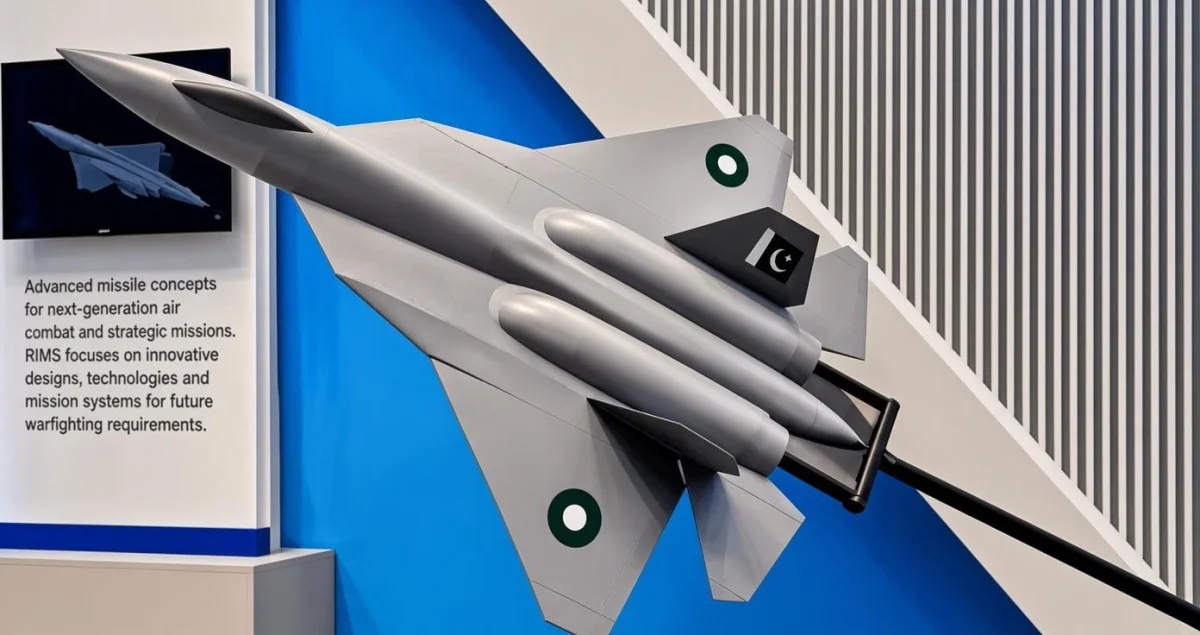
Pakistan’s proposed Fighter Experimental programme appears to be moving towards a larger, twin-engine stealth-oriented aircraft, with its latest concept image drawing visual comparisons to Russia’s Su-57 fighter.
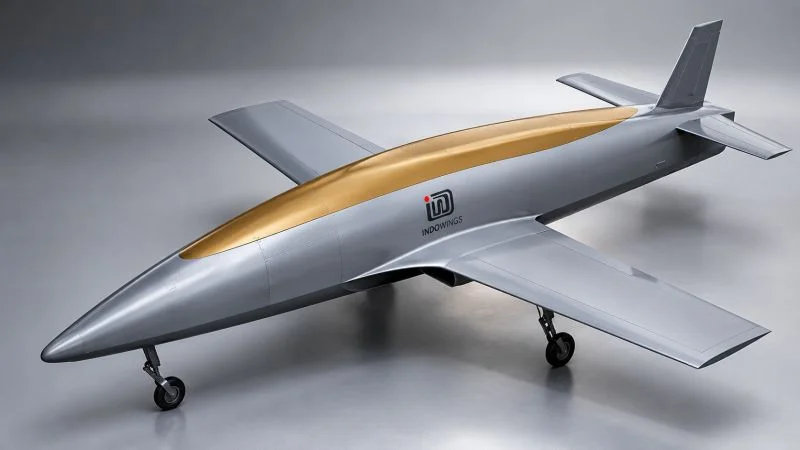
Islamabad: A newly surfaced concept image of Pakistan’s Fighter Experimental (PFX) programme suggests a significant evolution in the country’s ambitions to develop an advanced multirole combat aircraft. The design depicts a medium-weight, twin-engine fighter featuring several characteristics associated with low-observable, or stealth-oriented, aircraft.

First showcased publicly at the IDEAS 2024 defence exhibition in Karachi, the PFX programme has been described by the Pakistan Air Force (PAF) as a “4.5-plus-generation” fighter. Its development timeline reportedly targets completion by the end of the decade.
The latest rendering represents a departure from earlier concepts that appeared to draw heavily on the JF-17 Thunder, Pakistan’s existing lightweight, single-engine fighter developed in collaboration with China.
The proposed design features closely positioned engine exhausts, outward-canted vertical stabilisers, aligned wing and fuselage edges, a chined forebody and diverterless supersonic inlets (DSI). These elements are intended to support aerodynamic performance while potentially reducing radar visibility.
The aircraft’s broad central fuselage and single-piece bubble canopy have also prompted comparisons with Russia’s Sukhoi Su-57. However, visual similarities alone do not establish direct technological copying or reverse engineering.

According to the concept details, the aircraft could measure approximately 66 feet in length, with a wingspan of around 51.17 feet. The larger airframe is expected to accommodate a heavier weapons payload, a more capable active electronically scanned array (AESA) radar and additional fuel capacity, potentially improving operational range.
The programme also envisages advanced avionics and a domestic electronic warfare suite. However, these capabilities remain prospective and would depend on successful development and integration.
Despite Pakistan’s experience in manufacturing and upgrading the JF-17, developing a twin-engine fighter with advanced sensors, flight-control systems, composite structures and integrated avionics would represent a substantial technological challenge.
China is expected to be an important potential source of technical assistance, particularly in areas such as engines, radar technology and weapons integration. However, the extent of any future support has not been officially established.
The PFX remains a development ambition rather than a demonstrated operational aircraft. Its eventual capabilities, configuration and delivery timeline will depend on technological progress, funding and the successful transition from concept design to a flying prototype.